
Could the new £1m “Squatter Style” Cambridge toilets be the future
Cambridge City Council has just spent £1m rebuilding the public toilets on Silver Street, opposite Queens’ College, and the reaction has been almost entirely about three squat toilets and a £1 entry charge. I should disclose that Healthmatic MD, Piers Dibben, had previously looked at this site a number of years ago with an architecture firm, Mills Power. We had put together a proposal but it quickly fell away. One would therefore think that we might not be positive that this work didn’t in end up coming to us. This couldnt be further from the case. We think the coverage has missed almost everything we should be celebrating about this project.
Silver Street sits in one of the most constrained sites you could ask a council to build on. It’s on a listed bridge, in a conservation area, and it’s one of the main arrival points for coach parties visiting the city. Anyone who has tried to get planning permission for a toilet block in a sensitive heritage setting will know how hard this is. You are trying to persuade a conservation officer and half a dozen residents’ associations that a public toilet, of all things, deserves a slot in a location people specifically visit for its beauty. Public toilets don’t have a great reputation for how they age, and getting that permission through without watering down the design is genuinely difficult.
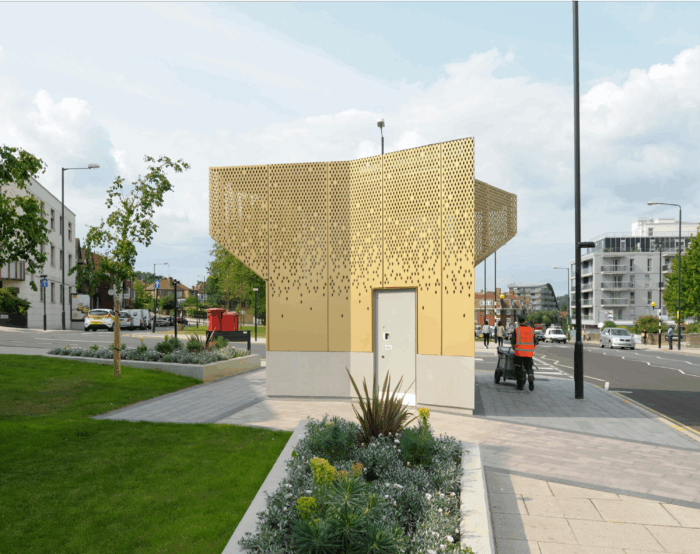
Add to that the fact the old 1980s block on the same site kept flooding because of its proximity to the River Cam. So this wasn’t just a rebuild, it was a rebuild that had to solve a structural problem the original never cracked, while still looking like it belongs on a listed bridge. That’s why Cambridge brought in Gort Scott, an award winning practice, rather than a standard toilet contractor. Whatever you think of the outcome, that’s a seriously difficult design brief. I must admit, we have worked with Gort Scott before and they create world class toilets that would be fit for the famous The Tokyo Toilet project, let alone in the UK. Take a look at the toilet we worked on together in Wembley.
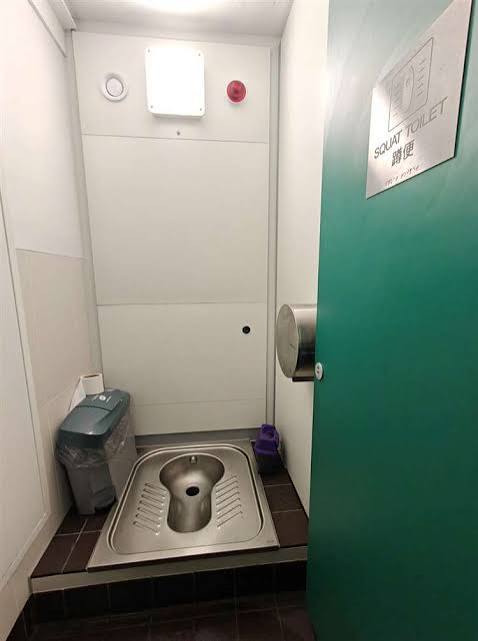
The bit that’s had all the attention is the inclusion of three, squat-style toilets, alongside six standard seated cubicles and three urinals. It’s easy to mock, but squat toilets remain completely normal in large parts of France and much of Asia, and there’s a solid operational logic behind them. Fewer moving parts means less to vandalise, less to repair, and easier to clean, because there’s no seat, no hinge, no cistern lid, nothing for someone to break off or deface. From a maintenance perspective it’s about as close to bulletproof as a toilet gets.
Would Healthmatic specify squat toilets on a typical council contract? Honestly, probably not. Most of our clients want facilities that work for the widest possible range of users, including people who simply won’t use a squat toilet whatever country they’re from. But I’ll say this plainly: I admire what Cambridge was trying to do here. They looked at the international visitor numbers coming through that site and designed for the toilet preferences those visitors actually have, rather than assuming one format suits everyone. That’s not a council being frivolous with public money. That’s a council trying to build something that gets used properly and doesn’t fall apart in year two. The location couldn’t be more perfect for tourists, being right next to a hire point for Punting Boats.
The other line of attack has been the cost, £1 to use the toilet, on top of the £1m build. One resident told the BBC she’d “much rather they built just a normal set of toilets and charged nothing.” I understand the instinct, but it doesn’t reflect what it actually costs to keep a public toilet clean, staffed, and safe in a city centre location with heavy tourist footfall. As an operator of toilets across the country, we tend to find that smaller budgets lead to smaller revenues and therefore a facility might result in having a net cost. A large budget, such as this, might actually turn a surplus due to the appeal of safe, well designed toilets that are capable of dealing with high footfall.
The era of spending a penny is long gone, and not because councils have got greedy. Staffing, servicing, vandalism repair, water and energy costs have all moved on considerably since that phrase meant anything close to the real cost of provision. In the south east of England and in tourist hotspots particularly, somewhere between 75p and £1 is a realistic figure if you want a facility that’s actually clean when someone walks in. The alternative to charging is usually one of three things: the council doesn’t build the facility at all, or it builds it and then can’t afford to maintain it, and within eighteen months you’ve got a boarded up block nobody wants to be seen next to. Or, it simply comes out of the residents council tax bills. Neither of those is a better outcome than a pound on the door.
What’s frustrated me most about the coverage is that it’s been almost entirely about the three squat toilets, when the facility also has six seated toilets, three urinals, a fully accessible wheelchair WC with a RADAR key, and baby changing. This is a genuinely well specified, inclusive facility with one part of it aimed squarely at a specific visitor group, and the story that’s travelled is “council makes everyone squat for a pound.” That’s not what’s happened here.
Providing public toilets isn’t a statutory duty for any council in England. Nobody is obliged to do this. Cambridge chose to take an unloved, flood prone, costly eyesore and turn it into something that can generate revenue, serve a genuinely huge and diverse visitor base, and hold its own on one of the most photographed bridges in the country. That’s ambition, and it’s exactly the kind of investment we should want to see more of, not less.
If we spend our time shooting down councils every time they try to modernise a facility that isn’t quite to everyone’s taste, we shouldn’t be surprised when the next council decides it’s easier to do nothing at all, or worse, to close the toilets altogether. Cambridge got the design brief right, solved a genuine flooding problem, and built something that will still be standing in good order in twenty years. As a business, we would always recommend bringing in architects to design solutions that are fit for purpose and have the potential to generate revenue for councils. This is exactly what Cambridge Council has done and it would have been far easier to shy away from the problem.
August 26, 2026 8:00 pm
Comments are closed here.